
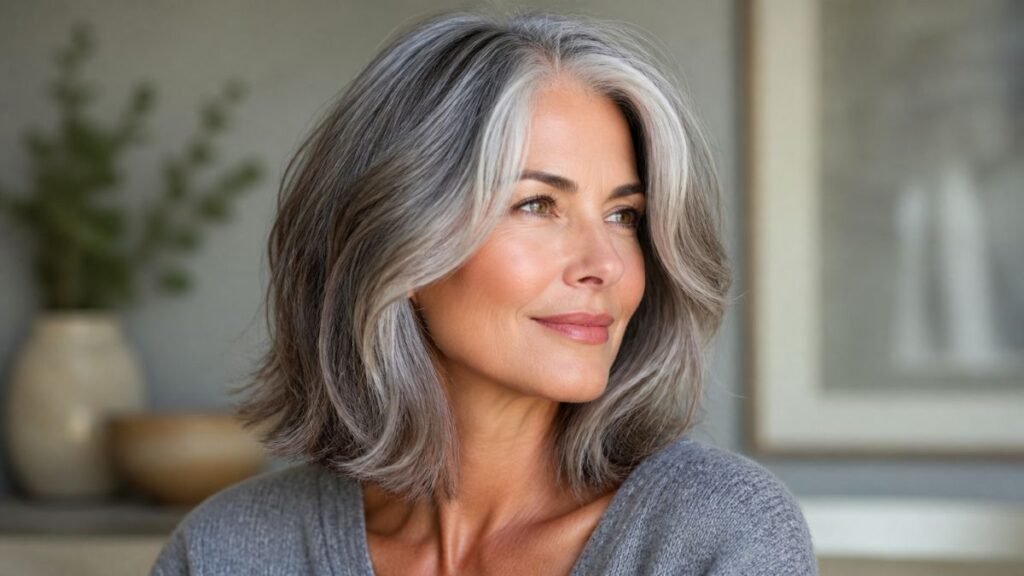

Grey hair is no longer something everyone feels pressured to hide. More people are choosing to work with their natural silver strands instead of covering them completely. This shift has made one hair colour technique especially popular: grey blending.
Grey blending is designed to make natural greys look softer, smoother, and more intentional. Instead of creating a harsh contrast between dyed hair and new grey growth, it helps both shades blend together in a natural way.
What Is Grey Blending?

Grey blending is a colouring technique that mixes natural grey hair with highlights, lowlights, or soft tonal shades. The goal is not to erase every silver strand, but to make the overall hair colour look balanced.
This method allows grey hair to become part of the style instead of something that needs to be hidden. It creates depth, movement, and softness while reducing the obvious line between dyed hair and natural roots.
Why Grey Blending Is Becoming Popular
Many people are tired of constant root touch-ups. Traditional full-coverage dye often requires regular salon visits because grey roots can become visible quickly.

Grey blending offers a more relaxed option. Since the technique works with natural greys, regrowth appears softer and less noticeable.
It also reflects a wider beauty shift. More people are embracing ageing naturally and choosing hair colours that feel authentic rather than overly maintained.
How Grey Blending Helps During The Transition
Transitioning from dyed hair to natural grey can feel difficult because the difference between old colour and new growth may look sharp.
Grey blending helps soften that contrast. A stylist may place lighter strands, darker tones, or translucent grey shades through the hair to create a smoother connection between colours.
This makes the growing-out stage easier and more flattering.
Why Placement Matters
Grey blending is not just about adding random highlights. The colour placement needs to be thoughtful.
The right tones can make grey hair look bright and reflective, while poor placement may make it look flat or uneven. Soft highlights can lift the overall colour, while lowlights can add depth and prevent the hair from looking washed out.
The goal is to make the grey strands look like a natural part of the hairstyle.
It Is Usually A Gradual Process
Grey blending is rarely an instant transformation. If the hair has been dyed dark for years, it may take several sessions to create a natural-looking blend.
Sometimes, the hair needs to be lightened gradually before it can match the grey tone. Moving too quickly can damage the hair or create unwanted colours.
A slower process usually gives a softer, healthier, and more realistic result.
Who Can Try Grey Blending?
Grey blending can work for many ages and hair types. It is especially useful for people who have visible grey roots but do not want full-coverage dye anymore.
It can also suit younger people who have early greys and want a low-maintenance way to manage them.
The technique can be adjusted depending on hair length, texture, natural colour, and how much grey is present.
Conclusion
Grey blending is a simple and elegant way to embrace natural grey hair without dealing with harsh roots or constant colouring.
Instead of hiding silver strands completely, this technique makes them part of the overall look. With soft colour placement, gradual blending, and the right tones, grey hair can look natural, polished, and confident.
For anyone ready to move away from full-coverage dye, grey blending offers a softer path toward embracing greys.